BMO Field World Cup 2026 Upgrades: How Toronto Is Preparing for FIFA
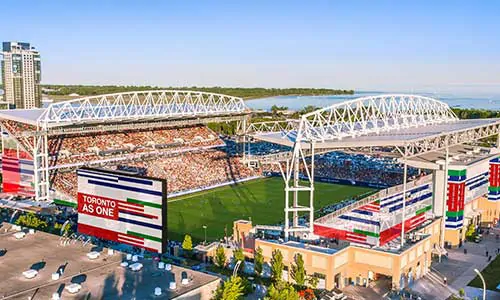
As the global spotlight shines brighter than ever on Canadian soccer, the BMO Field World Cup 2026 Upgrades: How Toronto Is Preparing for FIFA represent one of the most significant sporting transformations in the nation’s history. For the first time, Canada is co-hosting the world’s most prestigious soccer tournament alongside the United States and Mexico. To meet the stringent demands of world football’s governing body, Toronto’s iconic waterfront stadium is undergoing an extensive metamorphosis. Consequently, this massive infrastructure project is reshaping not just the venue itself, but the entire visitor experience in Ontario’s capital.
Table of Contents
- 1. The Vision Behind the Transformation
- 2. The Structural Breakdown of BMO Field World Cup 2026 Upgrades
- 3. Technical Renovations: Pitch, Lights, and Broadcaster Facilities
- 4. The Financial Investment Behind the Upgrades
- 5. Why the Upgrades Are a Game Changer for Transit
- 6. Comparing Toronto Stadium to Other World Cup Venues
- 7. The World Cup Match Schedule in Toronto
- 8. Conclusion & Call to Action
1. The Vision Behind the Transformation
BMO Field, temporarily rebranded as “Toronto Stadium” during FIFA tournament windows to comply with strict non-commercial naming guidelines, has a rich history. Originally constructed in 2007, the stadium was built as a modest soccer-specific venue to house Toronto FC of Major League Soccer (MLS). Over the years, it expanded to accommodate the Canadian Football League’s (CFL) Toronto Argonauts, leading to various configuration changes. However, hosting the World Cup requires an entirely different tier of infrastructure.
To elevate the stadium to FIFA’s elite category, the City of Toronto, in partnership with Maple Leaf Sports & Entertainment (MLSE), designed a comprehensive master plan. This initiative addresses not only the immediate capacity constraints but also long-term legacy benefits. Furthermore, the goal is to create an intimate atmosphere that highlights Toronto’s multicultural identity while delivering a state-of-the-art broadcast product to billions of viewers worldwide.
In order to achieve this, the renovation team focused heavily on modular architecture. Rather than building a massive, permanently oversized venue that would suffer from low post-tournament attendance, Toronto opted for a sustainable hybrid approach. As a result, the city is setting a precedent for future mid-sized host markets globally.
2. The Structural Breakdown of BMO Field World Cup 2026 Upgrades: How Toronto Is Preparing for FIFA
At the very heart of the stadium’s renovation is the challenge of capacity. Historically, BMO Field’s seating capacity sat at just under 30,000 for MLS games. However, FIFA strictly mandates a minimum of 45,000 seats for any host venue. To close this gap of over 15,000 seats, engineers executed a highly complex temporary expansion project.
Specifically, the temporary structures are divided across two major zones of the stadium:
- The North End Stand: An addition of approximately 10,000 temporary seats, designed to rise gracefully above the existing concourse.
- The South End Stand: An addition of around 7,000 temporary seats, engineered to blend seamlessly with the existing lower bowl.
- The Permanent North Patio: A newly designed, permanent 1,000-seat premium patio area that will remain as a lasting legacy for local sports fans post-2026.
Constructing these massive temporary stands required deep logistical planning. Engineers had to ensure the structures could withstand local wind loads coming off Lake Ontario, all while preserving the safety and sightlines of spectators. Additionally, the construction schedule was carefully phased so that Toronto FC and the Toronto Argonauts could continue playing their respective seasons with minimal disruption. This careful planning is a defining element of the BMO Field World Cup 2026 Upgrades: How Toronto Is Preparing for FIFA, showcasing how a city can host a mega-event without paralyzing its daily sports ecosystem.
3. Technical Renovations: Pitch, Lights, and Broadcaster Facilities
Beyond adding seats, Toronto Stadium underwent massive technological and physical overhauls. The playing surface itself is one of the most critical aspects of any FIFA review. While BMO Field has utilized a hybrid grass pitch since 2019, the turf management team implemented advanced soil heating, drainage, and specialized aeration systems to guarantee a pristine, resilient playing surface across all matches.
In addition to the turf, the visual experience for fans both in the stadium and at home has been substantially upgraded. Four giant new LCD screens have been strategically installed around the pitch to deliver crystal-clear replays and match information, dramatically improving modern spectator engagement.
Furthermore, broadcast infrastructure received a world-class face-lift. To support thousands of international media members, the west stand was retrofitted with expanded media tribunes, state-of-the-art press conference rooms, and enhanced fiber-optic cabling for lightning-fast data transmission. These permanent upgrades ensure that BMO Field remains highly competitive for future international friendlies, concerts, and major sporting events long after the tournament concludes.
4. The Financial Investment Behind BMO Field World Cup 2026 Upgrades: How Toronto Is Preparing for FIFA
Funding a world-class sporting event comes with substantial financial commitments. The total capital expenditure allocated specifically to BMO Field’s renovations sits at approximately $157.9 million CAD. This capital cost is a key segment of the City of Toronto’s broader $380 million CAD budget dedicated to hosting the tournament.
Naturally, an investment of this scale has sparked public debate regarding long-term utility. However, city officials and business leaders emphasize that the economic benefits will far outweigh the initial costs. By creating temporary stands rather than permanent concrete superstructures, the city avoided the “white elephant” syndrome—where stadiums remain empty and expensive to maintain after the event.
The table below provides a detailed breakdown of the stadium’s capacities and estimated investment figures:
| Metric / Upgrade Area | Pre-World Cup Status | World Cup Status (2026) | Legacy / Post-Tournament Status |
|---|---|---|---|
| Seating Capacity | ~28,000 – 30,000 | ~43,000 – 45,700 | ~31,000 (with permanent patio) |
| Pitch Technology | Standard Hybrid Grass | Upgraded Soil Heating & Drainage | Permanent High-Performance Turf |
| Video Displays | Standard scoreboards | 4 Giant LCD Screens | Permanent Premium Screens |
| Estimated BMO Field Cost | N/A | ~$157.9 Million CAD | Long-term city/provincial asset |
In addition to these direct physical upgrades, Toronto expects to recoup this capital through increased tourism, global marketing exposure, and massive consumer spending. The event is projected to inject millions into the local hospitality, retail, and transit sectors, proving that the financial investment behind the BMO Field World Cup 2026 Upgrades: How Toronto Is Preparing for FIFA is a calculated, strategic move.
5. Why the BMO Field World Cup 2026 Upgrades: How Toronto Is Preparing for FIFA are a Game Changer for Transit
A stadium’s success during a massive tournament is heavily dependent on how quickly and safely fans can arrive and depart. Recognizing this, the City of Toronto, in coordination with Metrolinx and the Toronto Transit Commission (TTC), implemented a multi-faceted regional transit strategy. Exhibition Place, where the stadium is located, is traditionally prone to traffic congestion during major events. Therefore, upgrading transit infrastructure was deemed an absolute necessity.
The primary transit hub for the matches is the Exhibition GO Station, situated immediately north of the stadium. Upgrades to this station include widened platforms, improved pedestrian pathways, and temporary ticketing structures designed to handle a massive influx of international visitors. Metrolinx has also increased train frequencies along the Lakeshore West line during match days to keep crowds moving efficiently.
On the municipal side, the TTC has optimized its streetcar routes. Dedicated transit lanes and increased streetcar service along the 509 Harbourfront and 511 Bathurst lines provide seamless connections from Union Station and the downtown core directly to the Exhibition grounds. These changes are crucial for managing the dense crowd flows expected on match days.
To further minimize traffic congestion, organizers are actively encouraging fans to use active transport or public transit. Comprehensive “last-mile” walking routes, clear multilingual signage, and specialized fan shuttles from major downtown hotels have been integrated into Toronto’s broader mobility plan. As a result, the city’s transit system is prepared to handle the historic crowd sizes efficiently.
The Role of the Exhibition Place Fan Zone
Additionally, the surrounding Exhibition Place grounds have been transformed into a massive, interactive Fan Zone. Serving as the central hub for non-ticketed fans, this area features giant viewing screens, multicultural food vendors, and interactive sponsor activations. By creating a robust space adjacent to the stadium, organizers can effectively distribute the crowd, reducing immediate pressure on the transit system and entry gates right before kickoff.
6. Comparing Toronto Stadium to Other World Cup Venues
An interesting aspect of the 2026 tournament is the diverse range of venues. Many games are being played in massive American NFL stadiums, such as MetLife Stadium in New Jersey or AT&T Stadium in Dallas, which can seat upwards of 80,000 to 90,000 spectators. In contrast, even with the temporary expansions, Toronto Stadium remains the smallest venue in the tournament, seating around 43,000 to 45,000 fans.
However, many soccer purists argue that bigger is not always better. Massive gridiron stadiums often place fans far from the pitch, diluting the intimate soccer-specific atmosphere. Toronto Stadium, on the other hand, was designed specifically for soccer. The stands are incredibly close to the touchlines, creating an intense, pressurized cauldron of sound that can give players a genuine home-field advantage.
Moreover, the compact nature of the stadium aligns perfectly with FIFA’s modern focus on sustainability. Instead of leaving behind massive, underutilized concrete structures, Toronto’s modular design demonstrates how a major city can host matches responsibly. This sustainable model could very well shape the future bidding processes for mid-sized nations looking to host global sporting events.
7. The World Cup Match Schedule in Toronto
To truly appreciate the BMO Field World Cup 2026 Upgrades: How Toronto Is Preparing for FIFA, one must examine the high-stakes matches the venue is hosting. Toronto is scheduled to host a total of six matches during the tournament, starting with Canada’s highly anticipated opening match.
Below is the official schedule of matches taking place at Toronto Stadium:
| Match Date (2026) | Match Details / Group | Tournament Phase |
|---|---|---|
| Friday, June 12 | Canada vs. Bosnia and Herzegovina (Canada’s Opener) | Group Stage |
| Wednesday, June 17 | Ghana vs. Panama | Group Stage |
| Saturday, June 20 | Group Match 3 | Group Stage |
| Tuesday, June 23 | Group Match 4 | Group Stage |
| Thursday, June 26 | Group Match 5 | Group Stage |
| Wednesday, July 1 | Round of 32 Match | Knockout Stage |
The crown jewel of this schedule is undoubtedly Canada’s opening match on June 12. Playing in front of a passionate, sold-out home crowd of over 43,000 fans is expected to provide an unparalleled boost for the Canadian Men’s National Team. Additionally, hosting a critical Round of 32 knockout match on July 1 (Canada Day) adds a poetic layer of celebration for local sports fans.
8. Conclusion & Call to Action
Ultimately, the successful execution of the BMO Field World Cup 2026 Upgrades: How Toronto Is Preparing for FIFA showcases the city’s ability to balance grand sporting ambitions with urban sustainability. By prioritizing modular, temporary expansions, investing in key transit and technical infrastructure, and maintaining fiscal responsibility, Toronto has created a blueprint for future host nations.
As fans from all over the world converge on Exhibition Place, they are treated to an intimate, high-energy environment that celebrates the very best of soccer. These upgrades will leave a lasting legacy, elevating BMO Field’s status in North American sports for decades to come.
Are you planning to attend one of the historic matches in Toronto? Stay updated with the latest event information, transit schedules, and ticketing guides by visiting the official FIFA Tournament Website or check out local planning updates on the City of Toronto Official Portal. Let us know your predictions for Canada’s opening match in the comments below!
Frequently Asked Questions (FAQ)
To help fans and residents fully understand the BMO Field World Cup 2026 Upgrades: How Toronto Is Preparing for FIFA, we have compiled answers to the most common questions surrounding this historic event:
Q1: What is BMO Field’s seating capacity for the World Cup?
A: Thanks to the addition of approximately 17,000 temporary seats in the north and south ends, the total capacity of the stadium has been expanded to approximately 43,000 – 45,700 seats to meet FIFA guidelines.
Q2: Why is the stadium referred to as “Toronto Stadium” during the tournament?
A: FIFA does not permit commercial, sponsor-branded stadium names during its official tournaments. Therefore, BMO Field is temporarily renamed “Toronto Stadium” for the duration of the matches.
Q3: How much did the BMO Field renovations cost?
A: The capital upgrades specifically dedicated to BMO Field cost approximately $157.9 million CAD, which is a key portion of Toronto’s overall $380 million CAD World Cup hosting budget.
Q4: What will happen to the temporary seats after the World Cup ends?
A: The temporary stands in the north and south ends will be safely dismantled, restoring the stadium back to its normal MLS/CFL configuration. However, permanent upgrades like the new screens, media spaces, and the north end patio will remain.
Q5: How can I travel to Toronto Stadium on match days?
A: Fans are highly encouraged to use public transit. You can take the GO Train directly to Exhibition GO Station or use TTC streetcar routes (509 Harbourfront or 511 Bathurst) directly to the Exhibition Place grounds.
Q6: How many World Cup matches are being played in Toronto?
A: Toronto Stadium is hosting a total of six matches. This includes five group stage matches (featuring Canada’s opening game on June 12) and one Round of 32 knockout match.