FIFA World Cup Host Selection Process: Evolution Through the Years
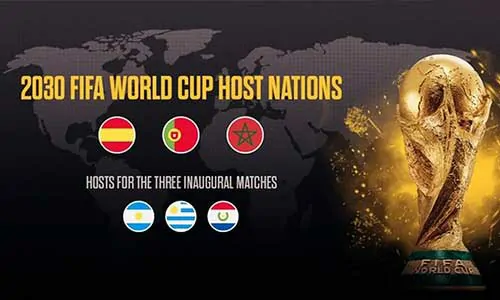
Table of Contents
- The Early Era: Origins of the FIFA World Cup Host Selection Process
- Geopolitical Shifts and the Modern FIFA World Cup Host Selection Process
- Formalization and the FIFA World Cup Host Selection Process
- Evaluating the Post-2015 Reformed FIFA World Cup Host Selection Process
- Step-by-Step Breakdown: The Current FIFA World Cup Host Selection Process
- A Structural Comparison of Historical and Current Bidding Frameworks
- Conclusion and the Path Forward for Host Selections
- Frequently Asked Questions
The FIFA World Cup stands as the pinnacle of global sports, capturing the attention of billions of fans across the globe. Over nearly a century, the tournament’s astronomical rise in popularity has elevated its scale, shifting the FIFA World Cup host selection process from an informal handshake system into one of the most complex, politically charged, and highly scrutinized bidding structures in the world. Historically, hosting the tournament was decided behind closed doors by a select group of powerful administrators. Consequently, this caused friction between nations and confederations, prompting a systematic transition toward modern transparency.
Understanding the historical evolution of the FIFA World Cup host selection process is crucial to seeing how football evolved from a localized tournament into a multi-billion-dollar global industry. Today, hosting rights require years of technical preparation, multi-billion-dollar infrastructural investments, and rigorous human rights audits. This article details the comprehensive timeline and structural shifts of the FIFA World Cup host selection process through the decades.
The Early Era: Origins of the FIFA World Cup Host Selection Process
In the inaugural years, the FIFA World Cup host selection process relied on simple consensus and executive decisions. During the first meeting in 1929, Uruguay was awarded the 1930 tournament due to its willingness to cover all travel and accommodation expenses for participating teams, alongside celebrating its centenary of independence. However, European teams hesitated to travel the vast distance across the Atlantic, signaling early on that logistics would play a decisive role in selection dynamics.
Subsequently, the decisions for the 1934 and 1938 tournaments caused intense geopolitical debates. The selection of Italy (1934) and France (1938) angered South American nations, who believed the tournament should alternate regularly between the two dominant continents. As a result, Uruguay and Argentina boycotted the 1938 event in protest, highlighting how the lack of a standardized bidding rule caused division.
Following the interruption of World War II, the FIFA World Cup host selection process returned in 1946 to award the 1950 tournament to Brazil. Over the next two decades, selections were made primarily at FIFA Congresses through diplomatic lobbying. However, the system lacked rigorous objective rubrics, creating structural challenges for the FIFA World Cup host selection process that would require formal restructuring in the decades to follow.
To resolve these tensions, FIFA introduced a more structured bidding system during the mid-20th century. For instance, the 1966 World Cup bidding cycle saw a competitive race between England, West Germany, and Spain. This era demonstrated that hosting was no longer just about convenience; it was increasingly seen as an opportunity for national branding and infrastructure modernization.
Geopolitical Shifts and the Modern FIFA World Cup Host Selection Process
During the late 20th century, the FIFA World Cup host selection process expanded beyond the traditional European-South American duopoly. The 1970 tournament in Mexico marked the first time the event was hosted in North America, signaling a strategic shift by FIFA to globalize the sport. Therefore, commercial potential and broadcasting capabilities began to rival historical football tradition as decisive factors.
By the 1980s and 1990s, the selection of hosts became a diplomatic tool, introducing intensive lobbying to the FIFA World Cup host selection process. In 1986, after Colombia resigned as host due to severe economic difficulties, FIFA quickly awarded the tournament to Mexico, demonstrating a need for highly stable backup hosts. Later, the awarding of the 1994 tournament to the United States proved highly lucrative, cementing the idea that emerging markets were viable and highly profitable.
Furthermore, the desire to expand football’s global footprint led to the controversial dual-hosting decision of 2002. Japan and South Korea co-hosted the tournament, which remains a landmark moment. From one perspective, the event was a commercial success; from another, the logistical complexities of dual-hosting prompted FIFA to temporarily ban joint bids, a policy that would remain active for several cycles.
Specifically, the 2002 joint bid was born out of intense political rivalry between the two Asian nations. FIFA’s leadership decided to split the hosting duties rather than choose one over the other, realizing that head-to-head competition was polarizing member states. This compromise underscored how heavily geopolitical compromise influenced the decision-making patterns of the era.
Formalization and the FIFA World Cup Host Selection Process
To create fairness, FIFA formalized a continental rotation rule to govern the FIFA World Cup host selection process in the early 2000s. This policy aimed to ensure that every confederation would eventually have the opportunity to showcase the tournament on home soil. Under this mechanism, South Africa secured the historic 2010 tournament, marking the first time the World Cup visited the African continent.
However, the rotation policy was short-lived and eventually abolished in 2007. The sudden change occurred because Brazil was the only country that submitted a bid for the 2014 tournament under the South American rotation cycle. Recognizing that a lack of competitive bidding reduced bargaining power and potential revenue, FIFA reverted to an open bidding system for future tournaments.
The historic December 2010 dual-vote changed the FIFA World Cup host selection process forever. On a single day, the 24-member FIFA Executive Committee voted to award the 2018 tournament to Russia and the 2022 tournament to Qatar. This decision triggered unprecedented global scrutiny, leading to independent investigations, high-profile arrests, and allegations of systematic corruption and geopolitical backroom deals.
Specifically, critics argued that the exclusive 24-member committee model made the FIFA World Cup host selection process vulnerable to unethical lobbying. The public backlash and subsequent legal interventions forced FIFA to undergo the most sweeping governance reforms in its history, completely dismantling its selection framework to win back the public’s trust.
Additionally, this period illustrated how much financial muscle could outmaneuver traditional technical bids. The evaluation reports compiled by FIFA’s own technical inspectors, which flagged Qatar’s extreme summer heat as a high-risk factor, were largely ignored by the executive voters. This disconnect proved that the selection mechanics of the time were fundamentally flawed and prioritized political alliances over operational feasibility.
Evaluating the Post-2015 Reformed FIFA World Cup Host Selection Process
In response to these massive controversies, the updated FIFA World Cup host selection process underwent a radical transformation. The notorious Executive Committee was dissolved and replaced by the larger, more inclusive FIFA Council. Furthermore, the ultimate authority to select the host nation was stripped from this small committee and transferred to the entire FIFA Congress, consisting of all 211 member associations.
Under the new structure, the entire FIFA Congress votes openly, making the FIFA World Cup host selection process highly transparent. Every member association’s vote is published immediately after the ballot, eliminating the possibility of secret voting pacts. The first test of this reformed system occurred in 2018 when the “United Bid” of Canada, Mexico, and the United States comfortably defeated Morocco’s bid to secure the 2026 tournament.
In addition to transparency, the modern process places a heavy emphasis on sustainability, infrastructure, and human rights. Bidders must now meet strict criteria, assessed by an independent task force that scores bids on a public point scale. Any bid failing to meet these minimum requirements is automatically disqualified before reaching the voting stage.
Recently, the selection of the 2030 and 2034 tournaments showcased a highly strategic application of this model. In late 2024, the FIFA Congress confirmed that Morocco, Portugal, and Spain would jointly host the 2030 tournament, with special centenary matches in Argentina, Paraguay, and Uruguay. Consequently, Saudi Arabia was selected to host the 2034 edition as the sole applicant, leveraging the continental rotation guidelines that restricted 2034 bids to Asia and Oceania.
Moreover, these structural updates introduced a rigorous independent audit process. Modern bids are subject to third-party assessments covering labor rights, environmental impact, and freedom of speech. This ensures that prospective host nations cannot merely present a polished public relations campaign but must demonstrate a concrete, legally binding commitment to ethical standards.
Step-by-Step Breakdown: The Current FIFA World Cup Host Selection Process
To ensure complete objectivity, the contemporary FIFA World Cup host selection process consists of three core phases:
- Phase 1: Invitation and Registration: FIFA formally invites member associations to express interest. Bidding nations must align with continental rotation rules, ensuring the tournament rotates away from the previous two host confederations.
- Phase 2: Bid Submission and Evaluation: Candidates submit comprehensive bid books detailing stadiums, transport, hotels, and human rights strategies. An independent FIFA Task Force conducts on-site inspections and scores each bid on a 500-point scale.
- Phase 3: The Congress Vote: If a bid fails this initial technical evaluation, the FIFA World Cup host selection process filters it out immediately. Qualified bids proceed to the FIFA Congress, where all 211 member nations cast their votes in a public, recorded session.
This systematic approach guarantees that prospective hosts are evaluated on tangible capabilities rather than political influence alone. Therefore, countries bidding for future editions must invest heavily in sustainable, long-term legacy planning.
A Structural Comparison of Historical and Current Bidding Frameworks
To summarize the structural evolution, let us compare the historical and current FIFA World Cup host selection process:
| Evaluation Category | Pre-2015 Bidding Framework | Post-2015 Bidding Framework |
|---|---|---|
| Final Decision Maker | 24-member Executive Committee | 211-member FIFA Congress |
| Voting Transparency | Secret ballot | Publicly recorded, open voting |
| Human Rights Audit | Not formally evaluated | Mandatory independent human rights assessment |
| Technical Disqualification | Rarely enforced | Strict “Red Card” system for failing standards |
| Bid Evaluation Publishing | Internal use only | Fully published technical report scores |
In contrast to the historical model, the modern system significantly limits the influence of backroom lobbying by spreading the voting power across the globe. Consequently, nations with fewer resources can sometimes align in voting blocks, creating a dynamic where geopolitical representation is more evenly distributed.
Conclusion and the Path Forward for Host Selections
Ultimately, the evolution of the FIFA World Cup host selection process reflects the broader transformation of global football. From the simple, handshake agreement that brought the inaugural tournament to Uruguay in 1930, to the highly sophisticated, multi-criteria bidding frameworks of the 2030 and 2034 editions, the process has matured significantly. While challenges and debates persist, the modern emphasis on transparency, open voting, and rigorous technical evaluations ensures a fairer playing field.
As football continues to unite diverse cultures, the mechanisms for selecting its global stage will undoubtedly keep evolving. To explore the latest updates on international tournaments and official bidding documents, visit FIFA’s official website or read more about the historical background on the Wikipedia World Cup hosts page. How do you feel about the future of multi-nation tournaments? Let us know in the comments section below!
Frequently Asked Questions
What is the FIFA World Cup host selection process?
The FIFA World Cup host selection process is the official mechanism through which FIFA evaluates, audits, and selects host nations for its quadrennial tournament. It involves a detailed bidding phase, independent technical scoring, and a final vote by the member associations.
How has the FIFA World Cup host selection process changed since 2015?
Following the corruption scandals of 2015, the FIFA World Cup host selection process transitioned the final voting rights from a 24-member Executive Committee to all 211 member nations of the FIFA Congress. It also introduced mandatory, open voting and strict, independent human rights audits.
Does the FIFA World Cup host selection process allow joint bids?
Yes, the FIFA World Cup host selection process explicitly allows and encourages joint bids, particularly for the expanded 48-team format. For instance, the 2026 edition is hosted by three nations (USA, Canada, and Mexico), and the 2030 edition will be hosted by Morocco, Portugal, and Spain.
How does the continental rotation rule affect the FIFA World Cup host selection process?
To ensure global representation, the continental rotation rule prevents confederations that hosted either of the previous two tournaments from bidding for the next edition. For example, because North America hosts in 2026 and Europe/Africa/South America host in 2030, only Asia and Oceania were eligible to bid for the 2034 tournament.
What happens if a bidding country fails the technical evaluation?
If a candidate fails to meet the minimum standards for infrastructure, security, or human rights set during the evaluation phase, they are disqualified by the independent Task Force and cannot proceed to the final vote in the FIFA Congress.
Who are the confirmed hosts for the 2030 and 2034 World Cups?
The 2030 World Cup will be co-hosted by Morocco, Portugal, and Spain, with celebratory centenary matches held in Uruguay, Argentina, and Paraguay. The 2034 World Cup will be hosted by Saudi Arabia.