FIFA World Cup Trophy History: Who Owns and Keeps the Original Cup?
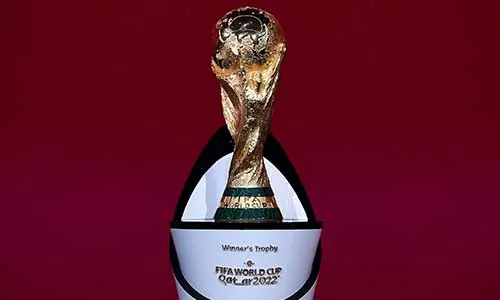
For football fans and players alike, lifting the golden trophy is the ultimate dream. It is the pinnacle of sporting achievement, representing decades of sweat, tears, and national pride. When we look at the legendary FIFA World Cup Trophy History: Who Owns and Keeps the Original Cup?, we uncover a story filled with suspense, triumph, and high-security protocols. While millions of spectators watch the victorious team hoist the shiny gold prize in celebration, few actually know the journey that this physical artifact undergoes once the stadium lights fade.
Indeed, the narrative surrounding this iconic prize is not just about matches won or goals scored. Rather, it is a complex tale involving daring thefts, heroic dogs, and strict international regulations. Many fans assume that the winning country takes the solid gold trophy home to display in their cabinet forever. However, the reality of modern sports governance is far more restrictive. In this comprehensive guide, we will break down the entire timeline of the world’s most famous sports trophy, analyzing its design, its evolution, and the strict rules governing its ownership.
To help you navigate this fascinating narrative, we have compiled a complete guide exploring the FIFA World Cup Trophy History: Who Owns and Keeps the Original Cup? below. From its humble beginnings in 1930 to the strict modern-day security protocols, let’s explore how this golden masterpiece became the most protected object in sports history.
Table of Contents
- The Jules Rimet Era (1930–1970)
- Dramatic Heists, Hiding Spots, and a Heroic Dog
- The Modern Era: Silvio Gazzaniga’s Masterpiece (1974–Present)
- Who Owns and Keeps the Original Cup?
- The Winners’ Replica vs. The Original Gold
- Strict Protocols: Who is Allowed to Touch the Trophy?
- Jules Rimet vs. Modern FIFA World Cup Trophy
- The Future of the Trophy: What Happens After 2038?
- Frequently Asked Questions (FAQ)
The Jules Rimet Era (1930–1970)
To fully comprehend the FIFA World Cup Trophy History: Who Owns and Keeps the Original Cup?, we must first travel back to the inaugural tournament in 1930. The original trophy was not the flowing, modern sculpture we recognize today. Instead, it was a beautiful Art Deco statuette designed by French sculptor Abel Lafleur. Originally named “Victory,” the trophy depicted Nike, the ancient Greek goddess of victory, holding an octagonal chalice over her head.
This legendary statuette was crafted from gold-plated sterling silver mounted on a rich, blue lapis lazuli base. It stood approximately 35 centimeters high and weighed 3.8 kilograms. In 1946, FIFA officially renamed the prize the “Jules Rimet Trophy” to honor the visionary French president who helped launch the global tournament. Consequently, the trophy became a symbol of global soccer supremacy, representing the shared dreams of emerging football nations.
The Jules Rimet Era and the FIFA World Cup Trophy History: Who Owns and Keeps the Original Cup?
Understanding the early days of this tournament is essential to grasping the complete FIFA World Cup Trophy History: Who Owns and Keeps the Original Cup? because the rules were entirely different back then. Originally, FIFA established a regulation stating that any nation that won the tournament three times would earn permanent ownership of the physical trophy. This rule created an intense, decades-long race among the world’s football powerhouses.
For many years, Italy, Uruguay, and Brazil all chased this prestigious milestone. Ultimately, it was the legendary Brazilian squad of 1970, led by the incomparable Pelé, that secured their third World Cup victory in Mexico. By defeating Italy in the final, Brazil earned the right to take the original Jules Rimet Trophy home to Rio de Janeiro permanently. At the time, football enthusiasts believed this would mark a glorious, permanent chapter in Brazil’s sporting legacy. However, fate had other, much darker plans for the historic sculpture.
Dramatic Heists, Hiding Spots, and a Heroic Dog
The history of the World Cup prize is as dramatic as any Hollywood thriller. During World War II, the trophy faced its first major threat. Fearing that Nazi forces would confiscate and melt down the precious gold-plated relic, Italian football official Ottorino Barassi secretly removed the trophy from a bank vault in Rome. He hid it in a humble shoebox beneath his bed for several years. Thanks to his quick thinking, the trophy survived the devastating war intact.
Furthermore, the physical trophy has been the target of professional thieves on multiple occasions. In March 1966, just months before the tournament was set to kick off in England, the Jules Rimet Trophy was stolen while on public exhibition at Westminster Central Hall in London. The theft sparked a massive international police investigation, throwing the host nation into deep embarrassment.
Surprisingly, the hero of this story was not a high-ranking detective, but a black-and-white collie dog named Pickles. While walking with his owner in South London, Pickles discovered a package wrapped in old newspapers tucked under a garden hedge. Inside was the missing Jules Rimet Trophy. Pickles instantly became a global celebrity, earning a lifetime supply of dog food and securing his own place in football folklore.
Unfortunately, the trophy’s luck ran out in 1983. After Brazil took permanent possession of the original cup, it was kept on display behind bulletproof glass at the Brazilian Football Confederation (CBF) headquarters in Rio de Janeiro. However, thieves realized that the wooden frame holding the glass was vulnerable. They broke in, neutralized the guards, and stole the original Jules Rimet Trophy. To this day, the original has never been recovered, and historians widely believe that the thieves melted it down into gold bars.
The Modern Era: Silvio Gazzaniga’s Masterpiece (1974–Present)
Following the permanent transfer of the Jules Rimet Trophy to Brazil in 1970, FIFA found itself in need of a brand-new design for the 1974 tournament in West Germany. To find a worthy replacement, the governing body launched an open competition, receiving fifty-three submissions from sculptors across seven countries. The winning design came from Italian artist Silvio Gazzaniga, working for the renowned GDE Bertoni trophy design house in Milan.
Gazzaniga’s masterpiece was a radical departure from the traditional cup design. His creation depicts two dynamic human figures rising up in a spiral, stretching outward to embrace and support a depiction of the Earth. According to Gazzaniga, the flowing, energetic lines represent the raw emotion, athleticism, and triumph of the modern athlete at the moment of victory.
Silvio Gazzaniga’s Creation in the Context of FIFA World Cup Trophy History: Who Owns and Keeps the Original Cup?
This design change represents a pivotal moment in the FIFA World Cup Trophy History: Who Owns and Keeps the Original Cup?, transitioning the trophy from a physical hand-held cup to a magnificent work of art. Made of 18-karat solid gold, the modern trophy stands 36.8 centimeters tall and weighs approximately 6.175 kilograms. Crucially, the base of the trophy features two concentric bands of precious green malachite, which beautifully contrast with the warm glow of the gold.
An interesting scientific detail about the modern trophy is that it is actually hollow. When the design was first unveiled, prominent scientists pointed out that if the trophy were solid 18-karat gold, it would weigh between 70 and 80 kilograms. Such a weight would make it physically impossible for athletes to lift comfortably above their heads during post-match celebrations. Therefore, Gazzaniga intentionally designed the structure with a hollow core, maintaining its grand visual scale while keeping its weight manageable for triumphant captains.
Who Owns and Keeps the Original Cup?
The core mystery for many fans remains: which country actually owns the physical gold trophy? If you are looking for the direct answer regarding the FIFA World Cup Trophy History: Who Owns and Keeps the Original Cup?, the simple reality is that no individual country is allowed to keep the actual gold prize. Following the tragic loss of the original Jules Rimet Trophy, FIFA drastically updated its regulations to ensure the safety of the current prize.
Consequently, the original 18-karat gold trophy remains the permanent, exclusive property of FIFA. It is treated as a priceless historical relic and is stored under maximum security. When it is not being presented on the global stage, the original trophy is kept in a highly secure, climate-controlled vault at the official FIFA website museum in Zürich, Switzerland. It only leaves this vault for official promotional events, such as the global FIFA World Cup Trophy Tour, and during the opening match and final of the tournament itself.
Therefore, the core concept behind the FIFA World Cup Trophy History: Who Owns and Keeps the Original Cup? is that the original remains the ultimate property of FIFA itself. No matter how many times a nation wins the tournament, they will never be allowed to take the solid gold original home to keep. The original trophy is only briefly handed to the winning team on the pitch during the post-match presentation before being taken back by FIFA officials behind closed doors.
The Winners’ Replica vs. The Original Gold
If the winning team does not get to keep the original, what do they actually take home? When examining the FIFA World Cup Trophy History: Who Owns and Keeps the Original Cup?, we must distinguish between the priceless original and the replicas given to the winning nations. To satisfy the teams’ desire to display their achievement, FIFA commissions a special replica for every single tournament.
This replica is officially known as the “FIFA World Cup Winner’s Trophy.” While it looks nearly identical to the original from a distance, there are several key differences:
- Material: Unlike the original, which is made of solid 18-karat gold, the Winner’s Trophy is made of bronze and plated with a thick layer of gold.
- Engraving: The replica is permanently engraved with the year, host nation, and the winning country’s name on its base, allowing the victorious football association to display it permanently at their national headquarters.
- Ownership: The winning national football association gets to keep this gold-plated replica permanently. It is a highly valued artifact, but it does not carry the multi-million dollar material value of the solid gold original.
In addition, there has only been one exception to this rule in modern history. Ahead of the 2010 World Cup in South Africa, FIFA commissioned a special, official replica to be gifted directly to former South African President Nelson Mandela. This remains the only time an individual has ever been awarded an official replica of the world’s most coveted sports prize.
Strict Protocols: Who is Allowed to Touch the Trophy?
Because the original trophy is so valuable and historically significant, FIFA enforces incredibly strict protocols regarding who is physically allowed to handle it. In fact, according to official FIFA guidelines, only a very select group of people may touch the solid gold trophy with their bare hands. This group is strictly limited to:
- Active or former players and managers who have actually won a FIFA World Cup tournament.
- Heads of State and presidents of sovereign nations.
- Official FIFA representatives and authorized security personnel.
As a result, even the family members of winning players, high-ranking sporting officials, and celebrities are prohibited from touching the gold without wearing protective gloves. This strict rule has occasionally led to controversy. For instance, during the 2022 World Cup final in Qatar, a famous celebrity chef bypassed security and was seen handling the trophy on the pitch, sparking widespread criticism and an internal FIFA investigation. This incident highlighted just how seriously the football community takes the sanctity of the physical prize.
Jules Rimet vs. Modern FIFA World Cup Trophy
This comparison table highlights the major milestones and physical differences in FIFA World Cup Trophy History: Who Owns and Keeps the Original Cup? over the decades.
| Feature | Jules Rimet Trophy (1930–1970) | Modern FIFA World Cup Trophy (1974–Present) |
|---|---|---|
| Designer | Abel Lafleur (France) | Silvio Gazzaniga (Italy) |
| Primary Material | Gold-plated sterling silver | 18-karat solid gold (Hollow core) |
| Base Material | Lapis Lazuli (Blue semi-precious stone) | Malachite (Green mineral bands) |
| Height & Weight | 35 cm / 3.8 kg | 36.8 cm / 6.175 kg |
| Current Location | Stolen in 1983 (Believed to be melted) | FIFA Museum (Zürich, Switzerland) |
| Permanent Keep Rule | Allowed after 3 wins (Retired to Brazil) | Never allowed (FIFA retains original permanently) |
The Future of the Trophy: What Happens After 2038?
As we look forward to future editions of the tournament, a practical question arises regarding the physical design of Silvio Gazzaniga’s masterpiece. The base of the modern trophy is engraved with the names of every winning nation since 1974. These names are arranged in a circular fashion on the bottom plate of the trophy, written in the language of the winning nation (e.g., “1974 Deutschland” or “2022 Argentina”).
However, the physical space on this bottom plate is finite. According to official estimates, there is only enough physical room to engrave the names of the winning countries up until the 2038 World Cup. Once that tournament is complete, the plate will be completely full.
Consequently, FIFA will face a choice: they can either redesign the base to accommodate more names, or commission an entirely new trophy design for the 2042 edition. While many purists hope that the iconic Gazzaniga design will remain, the evolving narrative of football history guarantees that change is inevitable. To learn more about the physical composition and structural history of this golden icon, you can explore Wikipedia’s detailed database on the trophy.
Unraveling the Mystique: FIFA World Cup Trophy History: Who Owns and Keeps the Original Cup?
In conclusion, tracing the FIFA World Cup Trophy History: Who Owns and Keeps the Original Cup? reveals a saga that matches the drama of the matches played on the pitch. The journey from the delicate Jules Rimet cup to the robust, modern golden masterpiece is a reflection of football’s growth into a multi-billion dollar global phenomenon. While the original solid gold trophy stays safely locked away in a Swiss vault, the dream of hoisting it remains the driving force for every aspiring footballer on earth.
As the countdown to the next FIFA World Cup continues, the mystique of this golden prize only grows stronger. What are your favorite memories of iconic captains lifting the golden globe? Do you think FIFA should change the trophy design after the base is filled in 2038? Share this article with your fellow football fans and join the conversation in the comments below!
Frequently Asked Questions (FAQ)
To help clarify the most common questions surrounding FIFA World Cup Trophy History: Who Owns and Keeps the Original Cup?, we have answered the top queries below.
1. Who is the actual owner of the original FIFA World Cup Trophy?
The original, solid gold FIFA World Cup Trophy is owned exclusively by FIFA, the global governing body of football. No individual country or football association is permitted to keep the original trophy, regardless of how many times they win the tournament.
2. Where is the original World Cup trophy kept?
The original trophy is stored under maximum security in a climate-controlled vault at the FIFA World Football Museum in Zürich, Switzerland. It only leaves this high-security location for the official FIFA Trophy Tour and the tournament’s final match.
3. What happened to the original Jules Rimet Trophy?
The original Jules Rimet Trophy was permanently awarded to Brazil in 1970 after their third World Cup victory. However, it was stolen from the CBF headquarters in Rio de Janeiro in 1983 and has never been recovered. It is widely believed that the thieves melted it down into gold bars.
4. What do the winning countries actually receive to keep?
Winning nations receive a gold-plated bronze replica, known as the “FIFA World Cup Winner’s Trophy.” The national football association is allowed to keep this replica permanently in their trophy cabinet.
5. Why did FIFA change the rules regarding the FIFA World Cup Trophy History: Who Owns and Keeps the Original Cup? after 1970?
FIFA changed the rules to prevent another permanent loss or theft of the original trophy. By retaining permanent ownership of the solid gold original, FIFA ensures that the trophy remains safe, secure, and part of the global game’s heritage forever.
6. Is the modern FIFA World Cup Trophy made of solid gold?
Yes, the modern trophy is made of 18-karat solid gold (which is 75% pure gold). However, the structure is designed with a hollow interior to prevent it from being too heavy for players to lift.