Football Formations Guide: From 4-4-2 to Today’s Tactical Systems
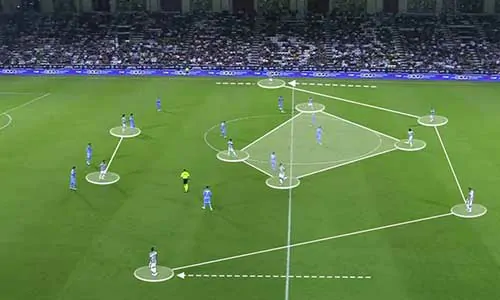
Table of Contents
- 1. Introduction
- 2. The Historical Evolution of Football Tactics
- 3. The Traditional Foundation: The Classic 4-4-2
- 4. Midfield Superiority: The 4-3-3 Revolution
- 5. The Golden Era of Balance: The 4-2-3-1 System
- 6. The Resurgence of the Back Three: 3-5-2 and 3-4-3
- 7. Fluidity and Hybrid Roles in the Modern Era
- 8. Tactical Comparison Table
- 9. How Coaches Choose the Right System
- 10. Summary and Conclusion
- 11. Frequently Asked Questions (FAQ)
Football is a continuously evolving sport where strategic innovation shapes the way the game is played on a weekly basis. For coaches, analysts, and enthusiastic supporters, understanding how teams arrange themselves on the pitch is essential to appreciating the deeper layers of the sport. This comprehensive Football Formations Guide: From 4-4-2 to Today’s Tactical Systems aims to analyze how structural layouts have transitioned from rigid, traditional roles to highly fluid, hybrid systems.
In the early days of association football, structures were heavily weighted toward attacking players, often featuring setups like the 2-3-5. However, as defensive organization improved and physical demands increased, managers sought greater balance. Consequently, the configurations we observe today are the result of decades of trial, error, and tactical innovation across different leagues and eras.
Furthermore, understanding these systems helps observers recognize the subtle shifts that occur during a match. A team starting in one shape might defend in another and attack in a third, demonstrating the incredible complexity of modern football. Therefore, this guide will serve as an analytical tool to break down these transformations step-by-step.
Understanding the Football Formations Guide: From 4-4-2 to Today’s Tactical Systems
To fully grasp contemporary tactical systems, we must first appreciate the historical progression that paved the way for modern layouts. During the mid-20th century, systems like the “W-M” formation (a 3-2-2-3 shape) dominated, focusing heavily on individual matchups. As the game became more organized, managers realized the importance of space control, leading to the development of zonal marking and structured defensive lines.
In addition, the introduction of “Total Football” by Rinus Michels and Johan Cruyff in the 1970s challenged the notion of fixed positions. This philosophy emphasized that any outfield player could temporarily assume the role of any teammate on the pitch. As a result, versatility became a highly prized attribute, laying the groundwork for the fluid strategies we observe in the current landscape.
Similarly, the physical preparation of athletes improved significantly over the years. Players became capable of covering vast distances, allowing coaches to demand high-intensity pressing and quick transitions. Consequently, the tactical setups of today are far more dynamic than the rigid structures of the past, requiring players to be comfortable in multiple zones of the pitch.
Historical Context of the Football Formations Guide: From 4-4-2 to Today’s Tactical Systems
For several decades, particularly in English football during the 1980s and 1990s, the flat 4-4-2 was the undisputed standard. This system is characterized by its clear-cut structure, consisting of four defenders, four midfielders, and two central strikers. The simplicity of the shape made it highly organized, easy to teach, and remarkably effective at covering the entire width of the pitch.
In a standard 4-4-2, the roles are generally straightforward but highly demanding:
- Full-backs: Primarily responsible for defending the flanks, though they occasionally overlap to support the wide midfielders.
- Central Midfielders: Usually divided into a defensive-minded ball-winner and a box-to-box runner who supports both phases of play.
- Wide Midfielders/Wingers: Tasked with delivering crosses into the box and tracking back to support their respective full-backs.
- Strikers: Often paired as a “big man-little man” combination, where one physical target man wins aerial duels to set up a quicker, goal-scoring partner.
However, despite its historical success, the classic flat 4-4-2 eventually began to struggle against teams utilizing three-man midfields. Because two central midfielders can easily find themselves outnumbered by three opponents, teams playing a 4-4-2 often lost control of the center of the pitch. Therefore, managers began seeking alternative setups to regain central superiority, leading to the tactical evolution detailed in this guide.
Analyzing Transitions in our Football Formations Guide: From 4-4-2 to Today’s Tactical Systems
As the need for central control became paramount, the 4-3-3 formation emerged as a highly effective solution. Popularized by Dutch football and later refined by Spanish clubs, most notably FC Barcelona, the 4-3-3 relies heavily on triangles, possession retention, and positional play. By utilizing three distinct central midfielders, teams can easily bypass a two-man midfield through quick, short passing combinations.
The magic of the 4-3-3 lies in the variety of roles within its central trio. Typically, the setup includes a deep-lying playmaker (often called the “single pivot”) who sits just ahead of the defensive line, flanked by two creative, energetic central midfielders (the “number 8s”). This configuration provides an excellent platform for dominating possession and controlling the tempo of the match.
Moreover, the attacking trio in a 4-3-3 offers great versatility. Instead of traditional wingers who stay wide and cross, modern variations often feature inverted wingers. These wide attackers cut inside onto their stronger foot to shoot or create, while the central striker might drop deep as a “False Nine” to drag opposing center-backs out of position. This fluid movement makes the system incredibly difficult to defend against when executed correctly.
The Golden Era of Balance: The 4-2-3-1 System
During the late 2000s and early 2010s, the 4-2-3-1 became arguably the most popular tactical system in world football. It offered a perfect bridge between the defensive stability of a 4-4-2 and the offensive fluidity of a 4-3-3. By employing two defensive midfielders (a “double pivot”) ahead of the back four, coaches could secure their defensive transitions while giving creative freedom to the four attacking players.
This system highlights several key tactical mechanisms:
- The Double Pivot: Two deeper midfielders who screen the defense, break up play, and initiate the transition from defense to attack.
- The Number 10: A central attacking midfielder who operates in the “space between the lines,” acting as the primary creative playmaker.
- Attacking Full-backs: Because the double pivot provides extra defensive cover, the full-backs are free to push high up the pitch, essentially acting as extra wingers.
In addition, the 4-2-3-1 is highly adaptable. When defending, the team can easily drop into a compact 4-4-1-1 or 4-5-1 shape, closing down passing lanes. Conversely, during possession, it can shift into an aggressive 2-4-4 or 2-3-5, smothering the opponent in their own half. Because of this inherent flexibility, many top clubs continue to use variations of this system to maintain structural balance.
Comparing Setups within the Football Formations Guide: From 4-4-2 to Today’s Tactical Systems
While four-back systems have dominated modern history, systems utilizing a back three have enjoyed a massive resurgence. Formations like the 3-5-2 and 3-4-3, which were once considered overly defensive or outdated, are now utilized by some of the most progressive coaches in the world. This shift is largely driven by the desire to build play from the back with a numerical advantage against opponent pressing systems.
In a three-back system, the wide center-backs are encouraged to carry the ball forward into midfield, creating overloads. Simultaneously, the wing-backs are tasked with covering the entire length of the flanks. Consequently, these players must possess exceptional physical stamina and tactical intelligence, as they act as defenders in the low block and wingers during possession phases.
Furthermore, defending in a back-three system offers unique advantages. When facing a two-striker system, three center-backs ensure a constant “plus-one” numerical superiority, leaving one defender free to cover or sweep up loose balls. On the other hand, if the wing-backs are pinned back too deep by an aggressive opponent, the shape can accidentally transform into a defensive 5-3-2 or 5-4-1, limiting the team’s ability to counter-attack effectively.
Fluidity and Hybrid Roles in the Modern Era
Today, the numbers used to describe a system (like 4-3-3 or 3-5-2) only tell a small fraction of the story. Modern football is defined by “phases of play,” where a team’s shape changes completely depending on whether they have the ball, are pressing, or are defending in a low block. For instance, a team might line up on paper in a 4-3-3 but build their attack in a 3-2-4-1 structure.
One of the most notable modern innovations is the use of the “inverted full-back.” Instead of running down the touchline, the full-back drifts inward during possession to play alongside the defensive midfielder, creating a box-like structure in the center of the pitch. This tactical maneuver provides extra passing options, helps control central areas, and offers strong protection against counter-attacks.
Similarly, the concept of “positional play” (Juego de Posición) requires players to constantly adjust their positions relative to the ball, their teammates, and the space. Therefore, players are no longer confined to a single role. A modern center-back must be comfortable playing as a midfielder, while wingers must understand how to defend deep and press intelligently. This extreme fluidity has made modern tactical setups more complex and exciting than ever before.
Why You Need This Football Formations Guide: From 4-4-2 to Today’s Tactical Systems
To help visualize these structural differences, the table below compares the key attributes, primary strengths, and notable weaknesses of the major tactical systems discussed in this guide:
| Formation | Key Strengths | Main Weaknesses | Famous Example |
|---|---|---|---|
| 4-4-2 (Flat) | Excellent pitch coverage; simple roles; strong flank play. | Can be easily outnumbered in midfield; rigid lines. | Manchester United (1998/99) |
| 4-3-3 | Superb central control; creation of passing triangles; fluid attack. | Vulnerable to counter-attacks down the flanks if fullbacks push high. | FC Barcelona (Pep Guardiola era) |
| 4-2-3-1 | Great defensive screen; clear roles; strong central creativity. | Can become isolated if the wingers and number 10 fail to track back. | Real Madrid (José Mourinho era) |
| 3-5-2 / 5-3-2 | Strong central defense; massive wingback support; solid buildup play. | Physically exhausting for wingbacks; can become too defensive. | Inter Milan (Antonio Conte era) |
By comparing these systems, we can clearly see that no single setup is perfect. Each structure offers a unique set of trade-offs, and successful managers are those who can maximize their system’s strengths while masking its inherent vulnerabilities based on the players at their disposal.
How Coaches Choose the Right System
A common misconception in football is that coaches simply pick their favorite shape and force their players into it. In reality, modern tactical planning is highly scientific and depends heavily on several key factors. First and foremost is the squad profile. If a manager lacks highly energetic, physically fit wing-backs, attempting to play a 3-5-2 would likely result in failure.
Secondly, opposition analysis plays a massive role in modern game preparation. Analysts spend hours identifying the opponent’s defensive weaknesses and pressing triggers. Consequently, a team might adjust their build-up shape specifically to exploit a vacancy in the opponent’s defensive block. Therefore, modern systems are highly reactive and customized for each matchday.
Finally, club philosophy and fan expectations can influence the choice of a system. Many clubs pride themselves on playing attractive, possession-based football, which naturally leads them toward variations of the 4-3-3. On the other hand, clubs fighting against relegation might prioritize defensive stability, leading them to deploy a compact, low-risk setup like the 4-4-2 or a defensive five-back system.
Summary and Conclusion
In summary, the journey of football tactics from the rigid lines of the classic 4-4-2 to the highly fluid, hybrid systems of the modern era demonstrates the sport’s incredible capacity for innovation. As space on the pitch becomes increasingly defended, coaches will continue to invent new ways to create overloads, exploit passing lanes, and secure defensive transitions.
Whether you prefer the simplicity and balance of traditional structures or the mind-bending complexity of modern box midfields and inverted full-backs, understanding these systems elevates your appreciation of the beautiful game. Tactical evolution never stops, and the systems of tomorrow will undoubtedly continue to surprise us.
What is your favorite tactical system to watch or play? Do you prefer the defensive resilience of a classic setup or the fluid dynamics of a modern system? Let us know your thoughts in the comments below, and don’t forget to share this guide with your fellow football fans!
For more deep-dive analyses on professional tactics and training methodologies, check out the tactical breakdowns on The Coaches’ Voice and review the latest tactical trends in UEFA’s official technical reports.
Frequently Asked Questions
Q1: Why did the flat 4-4-2 lose popularity in modern top-tier football?
A: The flat 4-4-2 fell out of favor primarily because it struggled against teams using three-man midfields (like the 4-3-3 or 4-2-3-1). Having only two central midfielders meant teams were easily outnumbered in the center of the pitch, leading to a loss of possession control and transition vulnerability.
Q2: What is the main difference between a wing-back and a traditional full-back?
A: A traditional full-back plays in a four-back defense, prioritizing defensive duties on the flanks. A wing-back plays in a three-back system, enjoying much more offensive freedom. Wing-backs are expected to cover the entire wing, acting as both defenders and attacking wingers.
Q3: How does an “inverted fullback” function in a modern system?
A: An inverted fullback drifts inward toward the central midfield during the possession phase rather than running down the touchline. This action creates a box or diamond midfield, helping the team dominate possession, control transitions, and prevent counter-attacks.
Q4: What is a “False Nine” role in football?
A: A False Nine is a central striker who regularly drops deep into the midfield space instead of staying high up the pitch. This movement pulls opposing center-backs out of position, creating space for inverted wingers or central midfielders to make forward runs into the penalty box.
Q5: Is there a single “best” formation in football?
A: No, there is no single best formation. Every tactical system has strengths and weaknesses. The best formation for any given team depends entirely on the technical and physical profiles of the available players, the opponent’s style of play, and the manager’s tactical philosophy.
Q6: How do teams change their shape between attacking and defending?
A: Modern teams use hybrid shapes. For example, a team might defend in a compact 4-4-2 low block to deny space, but during possession, they might transition into an aggressive 3-2-4-1 build-up shape by pushing one fullback into midfield and allowing the wingers to stay high and wide.