Offside Rule Explained: A Beginner’s Guide to Football’s Most Confusing Law
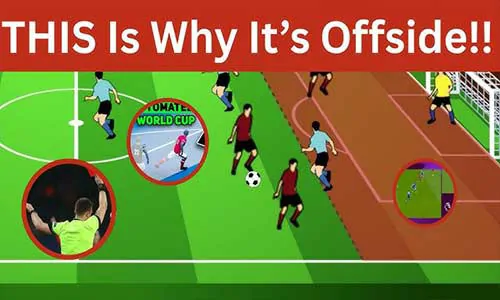
Football, or soccer as it is known in many parts of the world, is a game loved for its simplicity, tactical depth, and unmatched passion. Yet, if there is one regulation that consistently sparks heated debates in stadiums, pubs, and television studios worldwide, it is Law 11 of the official rulebook. If you have ever watched a match and found yourself scratching your head when a spectacular goal was suddenly disallowed, you are not alone. In this comprehensive guide, we will provide the ultimate Offside Rule Explained: A Beginner’s Guide to Football’s Most Confusing Law, ensuring you understand this crucial aspect of the beautiful game like a seasoned tactical analyst.
Understanding this rule is not just about avoiding confusion during a match; it is about grasping the tactical framework of modern football. Coaches build entire defensive and offensive strategies around this single law. Consequently, having the Offside Rule Explained in simple terms helps fans appreciate the spatial intelligence of strikers and the coordinated movements of defensive lines. Let us break down the complexity of this rule step by step.
Table of Contents
- 1. Understanding the Basics: Offside Rule Explained
- 2. The Three Crucial Conditions of Offside
- 3. Active Play vs. Passive Play: The Fine Line
- 4. Offside Rule Explained: Exceptions to the Law
- 5. The Role of VAR (Video Assistant Referee) in Offside Decisions
- 6. Offside Rule Explained: Historical Context and Tactical Evolution
- 7. Practical Tips for Beginners: How to Spot Offside Instantly
- 8. Frequently Asked Questions (FAQ)
- 9. Conclusion: Demystifying the Beautiful Game
Understanding the Basics: Offside Rule Explained
To begin our journey, we must make an essential distinction that puzzles many newcomers: there is a significant difference between being in an offside position and committing an offside offense. Merely standing in an offside position is not against the rules. A player can spend half the match standing near the opponent’s goal line without the referee blowing the whistle, provided they do not become involved in active play.
The core philosophy of this rule is to prevent “cherry-picking” or “goal-hanging”—a scenario where an attacker simply stands right next to the opposing goalkeeper, waiting for a long pass to easily score. Without this regulation, the game would lose its midfield dynamics, tactical depth, and athletic pacing. Therefore, the Offside Rule Explained highlights how this law preserves the integrity and competitive nature of association football.
According to the official IFAB Laws of the Game, the offside line is a dynamic, invisible boundary that moves constantly with the players. Understanding how this line is drawn is the first step toward mastering the law.
The Three Crucial Conditions of Offside
A player is considered to be in an offside position if they meet three specific conditions at the exact moment the ball is played or touched by a teammate. If even one of these conditions is not met, the player is onside. Let us analyze these conditions in detail to make the Offside Rule Explained as clear as possible.
- The Half of the Pitch: The player must be in the opponent’s half of the field. A player cannot be offside while standing in their own half of the pitch, regardless of where the defenders are.
- Proximity to the Goal: The player must be nearer to the opponent’s goal line than the ball itself. If the ball is ahead of the attacker when passed, the attacker is always onside.
- The Second-Last Opponent: The player must be nearer to the opponent’s goal line than the second-last opponent. Typically, the goalkeeper is the last opponent, meaning the “second-last opponent” is usually the final outfield defender. However, if the goalkeeper runs up the pitch, any two defenders can form the offside line.
To help you visualize these rules, the following comparison table outlines common match situations:
| Situation | Status | Reasoning |
|---|---|---|
| Attacker behind the ball when passed | ONSIDE | A player behind the line of the ball cannot be offside. |
| Attacker level with the second-last defender | ONSIDE | Being level does not constitute an offside position. |
| Attacker in their own half of the pitch | ONSIDE | Offside rules only apply in the opponent’s half. |
| Attacker ahead of the second-last defender when the ball is kicked | OFFSIDE | Meets all conditions of an offside position when the pass is initiated. |
Active Play vs. Passive Play: The Fine Line
As previously mentioned, simply standing in an offside position is not an infraction. For the referee to blow the whistle and award an indirect free kick to the opposing team, the player must actively participate in the game. This brings us to a critical distinction within the Offside Rule Explained: active vs. passive play.
The International Football Association Board defines “active involvement” through three distinct actions. If an offside-positioned player performs any of these, the linesman will raise the flag:
1. Interfering with Play
This is the most straightforward scenario. It occurs when a player physically touches or plays the ball that was passed or touched by a teammate. For example, if a midfielder passes the ball forward to a striker who was standing behind the last defender, and that striker touches the ball, an offside offense is committed.
2. Interfering with an Opponent
A player can commit an offside offense without ever touching the ball. This happens when they prevent an opponent from playing or being able to play the ball. Specifically, this includes blocking the goalkeeper’s line of vision, challenging an opponent for the ball, or physically obstructing a defender to allow a teammate to score.
3. Gaining an Advantage
If a teammate shoots, and the ball rebounds off the goalpost, crossbar, or is saved by the goalkeeper, an attacker who was originally in an offside position when the shot was taken cannot play the rebound. Touching the ball in this scenario is classified as gaining an unfair advantage from an offside position.
Offside Rule Explained: Exceptions to the Law
Like many rules in sports, Law 11 has its exceptions. These special rules add tactical variations to set pieces and throw-ins. To make our Offside Rule Explained guide complete, we must cover the specific instances where a player cannot be penalized for being in an offside position.
There is absolutely no offside offense if a player receives the ball directly from one of the following restarts:
- A Throw-in: Attackers can stand as close to the opponent’s goal as they like during a throw-in. Defenders must actively mark them, as the offside line is temporarily deactivated.
- A Corner Kick: Since a corner kick is taken from the very corner of the opponent’s goal line, the ball is naturally ahead of all attacking players. Therefore, by definition, an attacker receiving a corner kick cannot be offside.
- A Goal Kick: When a goalkeeper kicks the ball back into play from their own penalty box, an attacker can receive the ball directly in an offside position without penalty.
Tactically, teams often utilize these exceptions to bypass a high-pressing defensive line. For instance, long throw-ins deep into the opponent’s territory can create sudden goalscoring opportunities because defenders cannot rely on their usual offside trap.
The Role of VAR (Video Assistant Referee) in Offside Decisions
In the modern era of football, technology has dramatically reshaped how rules are enforced. The introduction of the Video Assistant Referee (VAR) has brought unprecedented precision—and plenty of controversy—to offside decisions. When discussing the Offside Rule Explained today, omitting the technological aspect would leave the picture incomplete.
Prior to VAR, assistant referees had a split second to look at the passer, look at the defensive line, and judge if an attacker was offside. This human limitation naturally led to occasional mistakes. Today, VAR uses high-definition, calibrated cameras to draw virtual lines on the pitch during reviews, determining offside by mere millimeters.
Furthermore, governing bodies like FIFA have introduced Semi-Automated Offside Technology (SAOT). This advanced system uses multiple tracking cameras and a sensor inside the match ball to determine the exact moment of contact and the precise skeletal positions of the players. Consequently, decisions are delivered faster and with scientific accuracy, reducing human error significantly.
Offside Rule Explained: Historical Context and Tactical Evolution
Why do we need the Offside Rule Explained in the first place? To truly appreciate Law 11, it helps to understand how it evolved. The rule was not invented to make the game complicated; rather, it was designed to make it watchable and dynamic. When the first official rules of football were drafted in 1863, the offside rule was incredibly strict—borrowing heavily from rugby. Any attacking player positioned ahead of the ball was considered offside.
As the game grew, this strict rule led to highly defensive matches with very few goals. Consequently, in 1866, the rule was amended to allow passes forward, provided there were at least three opponents between the attacker and the goal line. This was the birth of modern passing football.
In 1925, the rule changed again, reducing the requirement from three opponents to two. This adjustment caused an immediate explosion in goalscoring across leagues worldwide. The last major adjustment occurred in 1990, when the rule was modified to state that if an attacker is level with the second-last defender, they are considered onside. This gave a distinct advantage to attacking play, leading to the fast-paced, high-scoring matches we enjoy today.
Practical Tips for Beginners: How to Spot Offside Instantly
If you are watching a live match, you do not have the luxury of slow-motion replays or virtual lines. However, you can train your eyes to spot offside decisions instantly. Keeping this Offside Rule Explained checklist in mind will elevate your viewing experience:
- Watch the Assistant Referee: The linesman stands on the sideline, perfectly level with the second-last defender. If they spot an offside offense, they will raise their flag straight up. After the referee blows the whistle, the linesman will point the flag to indicate where the offense occurred (high, middle, or low area of the pitch).
- Focus on the Pass, Not the Catch: The most common mistake beginners make is looking at where the attacker is when they receive the ball. Remember, offside is judged at the exact millisecond the ball is kicked by the passing teammate, not when it arrives.
- Observe the Defensive Line: Coordinated defensive lines will often sprint forward together just before a midfielder passes the ball. This tactic, known as the “offside trap,” deliberately leaves the opposing strikers stranded in an offside position.
Frequently Asked Questions (FAQ)
Q1: Can a player be offside if they receive the ball from an opponent’s deliberate pass?
No. If an opposing defender deliberately plays the ball (for example, attempting a back-pass or clearing the ball poorly) and it goes to an attacker in an offside position, the attacker is not penalized. However, a deflection or a save by a defender does not count as a deliberate play.
Q2: What is the “delayed flag” rule in modern football?
In matches utilizing VAR, assistant referees are instructed to keep their flags down during an immediate goalscoring opportunity, even if they believe a player is offside. Once the attacking phase ends or a goal is scored, they will raise the flag. This ensures play is not stopped prematurely if the call was actually incorrect.
Q3: Is any part of the arm considered when drawing the offside line?
No. Only the parts of the body that can legally score a goal are considered when determining offside. This includes the head, torso, thighs, and feet. The hands and arms of all players (including goalkeepers) are completely excluded from offside line calculations.
Q4: Can you be offside if you are behind the goalkeeper?
Yes. The rule requires the attacker to be level with or behind the second-last opponent. If the goalkeeper rushes out of their box, they are no longer the last opponent. In this scenario, the offside line is drawn from the second-to-last defender left near the goal.
Q5: Can a player step off the pitch to avoid being called offside?
An attacking player can step off the field of play to show the referee they are not involved in active play. However, they must obtain the referee’s permission before re-entering the pitch, otherwise they can be penalized for entering without authorization.
Conclusion: Demystifying the Beautiful Game
As we conclude this comprehensive Offside Rule Explained guide, it is clear that while Law 11 may seem complex at first glance, its core principles are logical and essential for the health of the sport. It challenges strikers to perfect their timing, demands flawless synchronization from defenders, and keeps coaches constantly innovating tactical systems.
By understanding the difference between passive and active play, remembering the exceptions, and keeping an eye on the defensive lines, you can watch football with a deeper appreciation of its tactical nuances. The next time a referee raises their flag, you will not only understand the decision but also be able to explain the intricate details to those around you.
Did this guide help clear up the confusion for you? What is the most controversial offside decision you have ever seen in a match? Share your thoughts and join the discussion in the comments section below!