UEFA Away Goals Rule: Why It Was Removed and What Changed
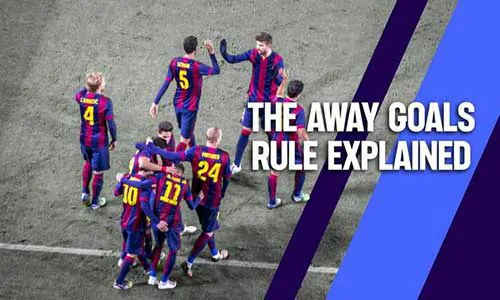
Table of Contents
- 1. Introduction to the Great Rule Shift
- 2. What Was the UEFA Away Goals Rule?
- 3. UEFA Away Goals Rule: Why It Was Removed and What Changed
- 4. Tactical Implications of the UEFA Away Goals Rule: Why It Was Removed and What Changed
- 5. The Modern Evolution of Football Infrastructure
- 6. What Happened After the Removal? The Practical Changes
- 7. Head-to-Head Comparison: Before vs. After the Rule Abolition
- 8. Pros and Cons of Scrapping the Away Goals Rule
- 9. The Lasting Legacy of the UEFA Away Goals Rule: Why It Was Removed and What Changed
- 10. Frequently Asked Questions (FAQ)
For more than half a century, knockout football in Europe was defined by a unique and often agonizing calculation. Football fans, players, and managers alike spent decades with their calculators in hand, trying to figure out if a 2-1 away loss was actually better than a 1-0 home win. This mathematical drama was born from the famous away goals tiebreaker. However, in 2021, football history took a historic turn when European football’s governing body decided to scrap this long-standing mechanic. In this comprehensive guide, we examine the history, statistics, and tactical results of the UEFA Away Goals Rule: Why It Was Removed and What Changed across the European football landscape.
When the rule was abolished, opinions in the global football community were highly divided. Traditionalists argued that the rule provided some of the most dramatic and unforgettable comebacks in sports history. On the other hand, tactical analysts and coaches welcomed the decision, stating that the rule had long outlived its original purpose. Furthermore, modern football has evolved far beyond the state of play in the mid-1960s, making a rule designed for a bygone era feel increasingly artificial and unfair.
To fully grasp the consequences of this seismic change, we need to analyze why the rule was introduced in the first place, how it altered the psychology of managers, and what the numbers tell us about the matches played after its removal. Consequently, this article serves as a deep dive into the evolution of European competition, ensuring you understand every angle of this modern tactical transition.
What Was the UEFA Away Goals Rule?
The UEFA away goals rule was first introduced during the 1965–66 season of the European Cup Winners’ Cup. Before its introduction, if a two-legged knockout tie ended in a draw on aggregate score, teams had to undergo complicated solutions. These solutions included playing a third match on a neutral ground, or in some extreme cases, flipping a coin to decide who would progress to the next round.
To eliminate these highly unsatisfactory and expensive tiebreaker methods, UEFA established a simple principle:
If the total goals scored by both teams over two legs are equal, the team that has scored more goals away from home wins the tie.
This was often colloquially described as away goals “counting double”. In reality, they did not count as two points on the scoreboard. Instead, they acted as a primary tiebreaker. For instance, if Team A won the first leg 2-1 at home, and Team B won the second leg 1-0 at their stadium, the aggregate score would be 2-2. However, Team B would progress because they scored one away goal, whereas Team A scored zero away goals.
This simple mathematical adjustment entirely changed how football teams approached two-legged knockout ties. It forced managers to weigh the risks of attacking away from home against the devastating consequences of conceding a goal in front of their own fans. For decades, this rule provided the backdrop for legendary Champions League nights, where a single late away goal could completely turn a tie on its head.
UEFA Away Goals Rule: Why It Was Removed and What Changed
The decision to scrap the rule was not made overnight. For years, elite managers like Arsene Wenger, Jose Mourinho, and Diego Simeone voiced their concerns at UEFA’s annual coaches’ forums. The tipping point arrived in June 2021. After recommendations from key committees, the UEFA Executive Committee officially announced the abolition of the rule across all men’s, women’s, and youth club competitions.
The primary justification for this historic decision lies in the fundamental transformation of home advantage. According to an official UEFA announcement, statistics from the mid-1970s to the modern era showed a massive reduction in the gap between home and away wins. In the 1970s, home teams won roughly 61% of games, while away teams won only 19%. By the late 2010s, home wins had declined to approximately 47%, while away wins rose to 30%.
Furthermore, the average number of goals scored at home versus away also narrowed significantly. Because the physical, environmental, and tactical gap between playing at home and playing away had shrunk, continuing to apply a massive advantage to away goals began to look unfair. The rule had transformed from an encouraging incentive for away teams into a heavy punishment for home teams.
Therefore, UEFA concluded that the rule was running counter to its original purpose. Instead of encouraging exciting, attack-minded away performances, it was discouraging home teams from playing offensive football. Managers realized that conceding an away goal in the first leg was such a tactical disaster that they would rather settle for a dull, defensive 0-0 draw at home than risk attacking.
Tactical Implications of the UEFA Away Goals Rule: Why It Was Removed and What Changed
When studying the UEFA Away Goals Rule: Why It Was Removed and What Changed, the shift in tactical setups is highly visible. Under the old system, the home team in a first leg had to play with extreme caution. Conceding a single away goal meant they would have to score twice as many in the return leg to balance the tiebreaker scales. This led to highly defensive, conservative first-leg matches, which disappointed fans and broadcasters alike.
Conversely, without the away goals rule, first-leg matches have become significantly more open. Home teams are no longer terrified of conceding a goal because a 2-1 or 3-2 victory still counts as a legitimate lead heading into the second leg. Consequently, managers can adopt more aggressive, proactive strategies from the opening whistle, rather than waiting for the second leg to take tactical risks.
On the other hand, the dynamic of the second leg has also shifted. Previously, if the away team scored late in the second leg, it often killed the match entirely. This was because the home team suddenly faced the impossible mountain of needing two goals due to the away goals tiebreaker. Now, a late away goal simply changes the aggregate score. This keeps the tie alive and allows for dramatic, late-game pushes that culminate in extra time or penalty shootouts rather than an early, deflated exit.
The Modern Evolution of Football Infrastructure
To truly understand why the away goals rule became obsolete, we must examine how the physical reality of European travel has changed since 1965. In the mid-20th century, traveling to an away match in Eastern or Southern Europe was an exhausting, multi-day journey. Teams had to endure long train rides, unreliable commercial flights, and unfamiliar hotels with poor facilities.
Moreover, pitches in the 1960s and 1970s were highly inconsistent. Away teams often had to play on muddy, frozen, or uneven fields, using heavy leather balls that behaved unpredictably in different weather conditions. Stadium crowds were also far more hostile, with minimal security separating the away players from passionate local fans. In this environment, scoring an away goal was an incredibly difficult feat that deserved a special reward.
In contrast, modern football operates in a highly standardized, luxury ecosystem. Teams travel on private charter flights, stay in five-star hotels with personal chefs, and prepare using advanced sports science. Pitch conditions in elite competitions like the Champions League are strictly regulated by UEFA, ensuring identical playing surfaces regardless of whether a match is played in London, Munich, or Madrid.
Additionally, the introduction of the Video Assistant Referee (VAR) has standardized officiating across Europe. Hostile home crowds can no longer easily influence referees into making biased decisions. Because every aspect of the modern game has been optimized to minimize external travel stress, the fundamental concept of “home disadvantage” has largely disappeared.
What Happened After the Removal? The Practical Changes
So, what exactly happens now when a two-legged tie ends in a draw? The new system is straightforward and returns to the traditional roots of competitive sport:
- No Away Multiplier: Goals scored away from home have the exact same value as goals scored on home turf.
- Extra Time: If the aggregate score is level after 180 minutes of play, two 15-minute periods of extra time are played. This rule applies regardless of which team scored more away goals.
- Penalty Shootout: If the score remains tied after the 30 minutes of extra time, the winner is decided via a penalty shootout.
According to comprehensive sports analysis on Goal.com, this change has led to a noticeable increase in the number of knockout matches going into extra time and penalty shootouts. While some critics argue this adds physical fatigue to players who already play too many games, fans are treated to pure, unadulterated drama where matches are decided on the pitch rather than through mathematical tiebreakers.
This structural change also eliminates a highly criticized sporting paradox. Under the old system, if a match went to extra time in the second leg, the away team had a massive advantage. If the away team managed to score during those extra 30 minutes, the home team was forced to score twice to progress. Scrapping the rule restored sporting fairness, ensuring that both teams operate on an equal playing field during extra time.
Head-to-Head Comparison: Before vs. After the Rule Abolition
To help visualize how these regulations differ, the table below outlines the core changes introduced after the abolition of the away goals rule in European football.
| Feature / Scenario | With Away Goals Rule (Before 2021) | Without Away Goals Rule (Post-2021) |
|---|---|---|
| Aggregate Tie (e.g., 3-3) | Decided by the team with the most away goals. | Proceeds directly to 30 minutes of extra time. |
| First-Leg Mindset | Highly defensive home teams fearing conceding away goals. | More open, attacking play from both sides. |
| Extra-Time Advantage | Favored away team, as their extra-time goals still counted as away goals. | Fair and equal. Extra-time goals do not carry any special weight. |
| Deciding Method | Away goal count, extra time, or penalties. | Purely extra time and penalties. |
Pros and Cons of Scrapping the Away Goals Rule
While the change has been widely praised by tacticians, it has also sparked intense debate among football enthusiasts. Let us break down the main arguments surrounding this massive structural shift.
The Advantages of Scrapping the Rule
- Increased Attacking Intent in First Legs: Without the fear of conceding a costly away goal, home teams can play with greater freedom and field more offensive lineups.
- Restored Fairness in Extra Time: It removes the unfair scenario where an away team scores in extra time, forcing the home team to score twice in just 15 or 30 minutes.
- Simpler Calculations: Fans and players no longer need to perform complex mental arithmetic during high-stress moments. The team with more goals simply wins.
- More Direct Football: Teams are rewarded for scoring goals and winning matches, rather than playing defensively to protect a mathematical aggregate score.
The Disadvantages of Scrapping the Rule
- Loss of Unique Drama: The away goals rule provided iconic, heart-stopping moments where a single touch could completely reverse the outcome of a tie in seconds.
- Player Fatigue: Because more games end in aggregate draws, players are forced to play an extra 30 minutes of exhausting football, raising the risk of injuries.
- Second-Leg Caution: In some cases, teams might play more conservatively in the second leg, knowing they can rely on the safety net of extra time or penalties if they draw.
The Lasting Legacy of the UEFA Away Goals Rule: Why It Was Removed and What Changed
Ultimately, the legacy of the UEFA Away Goals Rule: Why It Was Removed and What Changed represents a broader shift towards modernization and sporting integrity in world football. While the rule gave us legendary comebacks, it belonged to an era of difficult travel and unstandardized pitches. As football transitioned into a highly calculated, multi-billion-dollar industry, relying on a 1960s tiebreaker began to conflict with the pursuit of sporting fairness.
Today, knockout ties in the UEFA Champions League, Europa League, and Conference League are decided on the pitch through direct sporting merit. This change has successfully opened up first-leg matches, making them highly entertaining spectacles for fans worldwide. While we may occasionally miss the unique mathematical tension of the old system, the game of football is undoubtedly more logical, fair, and exciting without it.
As we look forward to future knockout stages, the abolition of this rule continues to shape modern coaching strategies and team dynamics. Managers can no longer hide behind defensive blockades, and players must fight until the final whistle of extra time to secure their place in European history.
Frequently Asked Questions (FAQ)
Q1: In what year did UEFA officially remove the away goals rule?
A: UEFA officially abolished the away goals rule in June 2021, making the 2021/22 season the first to be played entirely without the tiebreaker.
Q2: What happens now if a Champions League tie ends in a draw on aggregate?
A: If the aggregate score is tied after two legs, the match goes directly into 30 minutes of extra time, followed by a penalty shootout if the teams remain level.
Q3: Why did UEFA decide to get rid of the away goals rule?
A: The rule was scrapped because modern travel, pitch standardization, and VAR have significantly reduced the home-court advantage, making the rule obsolete and excessively punitive to home teams.
Q4: Does the away goals rule still apply in extra time?
A: No, the away goals rule has been completely removed from all phases of UEFA club competitions, meaning goals scored during extra time do not carry any special weight.
Q5: Which competitions were affected by this rule change?
A: The change applies to all UEFA club competitions, including the Champions League, Europa League, Conference League, Women’s Champions League, and youth tournaments.
Q6: Did removing the away goals rule increase the number of penalty shootouts?
A: Yes, statistics show a noticeable increase in matches going to extra time and penalty shootouts since the rule was removed, as aggregate draws can no longer be settled by away goals.
What Is Your Take on This Rule Change?
The abolition of the away goals rule was undoubtedly one of the most significant changes in modern football history. While it restored tactical balance and sporting fairness, some fans still miss the heart-stopping comebacks of the past. Do you think UEFA made the right call, or should they bring back the away goals rule? Let us know your thoughts in the comments section below!