UEFA Champions League Winners List: Every Champion Since 1956
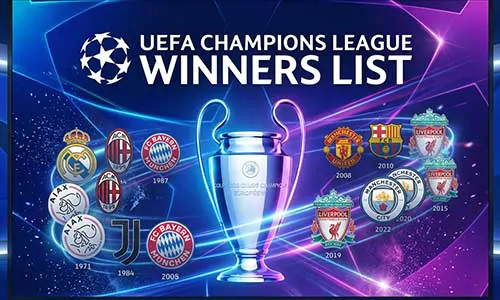
Table of Contents
- 1. The Genesis of the European Cup (1955–1992)
- 2. Entering the Modern Champions League Era (1992–Present)
- 3. Analyzing the UEFA Champions League Winners List: Every Champion Since 1956
- 4. Chronological UEFA Champions League Winners List: Every Champion Since 1956
- 5. Key Insights from the UEFA Champions League Winners List: Every Champion Since 1956
- 6. Frequently Asked Questions (FAQ)
The UEFA Champions League is widely regarded as the ultimate stage in club football. Every season, elite European clubs compete for the honor of lifting the famous “Big Ears” trophy. For football fans and sports historians alike, the UEFA Champions League Winners List: Every Champion Since 1956 represents the definitive archive of sporting greatness. From the early dominance of Real Madrid in the late 1950s to the modern, high-stakes matches of the present day, this list traces the evolution of the beautiful game at its absolute peak.
In this comprehensive guide, we will explore the history of the tournament and present the complete chronological winners’ roll. Furthermore, we will break down the dominant eras, analyze key statistics by club and country, and examine how new champions continue to emerge. Consequently, whether you are a casual fan or a dedicated football historian, you will find everything you need to know about the legendary champions of Europe right here.
The Genesis of the European Cup (1955–1992)
Before it became the global media sensation we enjoy today, the tournament was officially known as the European Champion Clubs’ Cup, or simply the European Cup. Established in 1955, the competition was envisioned by French journalist Gabriel Hanot and his editors at L’Équipe. Their primary objective was to create a continental tournament that would definitively crown the finest club team in Europe through direct competition.
Initially, the tournament operated as a straight knockout competition. Only the reigning domestic league champions of each UEFA-affiliated nation, alongside the defending European champion, were granted entry. Therefore, the margins for error were incredibly slim, and every match carried immense weight. Real Madrid instantly established themselves as the inaugural powerhouse, claiming the first five editions of the tournament from 1956 to 1960. This legendary squad, featuring iconic players like Alfredo Di Stéfano and Ferenc Puskás, set a standard of continental excellence that remains the benchmark for modern clubs.
Moreover, subsequent decades saw distinct tactical philosophies rise to prominence. During the early 1970s, the Ajax side led by Johan Cruyff introduced “Total Football” to the world, securing three consecutive European Cup titles. This golden era was immediately followed by Bayern Munich’s own three-year dominance, powered by the defensive genius of Franz Beckenbauer. Later, English football established an era of unprecedented dominance, with Liverpool, Nottingham Forest, and Aston Villa collectively winning six consecutive titles between 1977 and 1982. Consequently, these early eras laid the foundations of global football culture.
Entering the Modern Champions League Era (1992–Present)
In 1992, UEFA introduced a massive rebrand that transformed the competition into the UEFA Champions League. Most notably, this modernization introduced a round-robin group stage to replace the traditional early-round knockout format. This change guaranteed more high-profile fixtures between elite clubs, which significantly boosted television rights and global viewership. Over the years, the entry requirements expanded, allowing non-champion league runners-up and top-four finishers from elite leagues to participate.
As a result, the tournament became far more competitive and physically demanding. For over two decades, the “Champions League curse” dictated that no team could successfully defend their crown in the modern era. However, this historic barrier was finally broken by Real Madrid, who achieved a remarkable three-peat between 2016 and 2018 under the managerial guidance of Zinedine Zidane. This historic feat solidified their status as the tournament’s most successful club.
In recent years, the distribution of power has continued to shift with the emergence of new footballing giants. For instance, Paris Saint-Germain (PSG) claimed their first-ever Champions League title in 2025 with an emphatic 5-0 victory over Inter Milan in Munich, completing a historic continental treble. Demonstrating incredible resilience, the French side followed up this success by defending their title in 2026, defeating Arsenal in a dramatic penalty shootout in Budapest. These modern milestones show that while traditional powerhouses remain strong, new narratives are constantly being written.
Analyzing the UEFA Champions League Winners List: Every Champion Since 1956
When studying the historical trends of the UEFA Champions League Winners List: Every Champion Since 1956, the absolute dominance of a few select clubs is highly apparent. Real Madrid sits comfortably at the top of the European hierarchy with an astonishing 15 titles. Their unique relationship with this tournament has spanned multiple generations, making the club synonymous with European glory. Behind them, AC Milan remains Italy’s most decorated representative with 7 titles, although their most recent triumph occurred back in 2007.
In addition, English giants Liverpool and German powerhouses Bayern Munich are tied with 6 trophies each. Both institutions have successfully navigated both the historical European Cup format and the pressure of the modern Champions League era. Barcelona follows closely with 5 titles, heavily influenced by the tactical revolutions of Pep Guardiola and the era-defining brilliance of Lionel Messi in the late 2000s and early 2010s.
Furthermore, keeping track of the UEFA Champions League Winners List: Every Champion Since 1956 allows us to observe the rise of first-time winners. Manchester City joined the elite circle in 2023 under Guardiola, followed by Paris Saint-Germain’s historic back-to-back victories in 2025 and 2026. Therefore, the list serves as a living history, reflecting the shifting economic and tactical landscapes of European football.
Chronological UEFA Champions League Winners List: Every Champion Since 1956
As you browse through the UEFA Champions League Winners List: Every Champion Since 1956, you will notice how the cup has traveled across the continent. Below is the complete, detailed chronological record of every final played, including the winners, runners-up, final scores, and host venues.
| Season | Champion | Nation | Score | Runner-up | Final Venue |
|---|---|---|---|---|---|
| 1955–56 | Real Madrid | Spain | 4–3 | Reims | Parc des Princes, Paris |
| 1956–57 | Real Madrid | Spain | 2–0 | Fiorentina | Santiago Bernabéu, Madrid |
| 1957–58 | Real Madrid | Spain | 3–2 (aet) | Milan | Heysel Stadium, Brussels |
| 1958–59 | Real Madrid | Spain | 2–0 | Reims | Neckarstadion, Stuttgart |
| 1959–60 | Real Madrid | Spain | 7–3 | Eintracht Frankfurt | Hampden Park, Glasgow |
| 1960–61 | Benfica | Portugal | 3–2 | Barcelona | Wankdorf Stadium, Bern |
| 1961–62 | Benfica | Portugal | 5–3 | Real Madrid | Olympisch Stadion, Amsterdam |
| 1962–63 | Milan | Italy | 2–1 | Benfica | Wembley Stadium, London |
| 1963–64 | Inter Milan | Italy | 3–1 | Real Madrid | Praterstadion, Vienna |
| 1964–65 | Inter Milan | Italy | 1–0 | Benfica | San Siro, Milan |
| 1965–66 | Real Madrid | Spain | 2–1 | Partizan | Heysel Stadium, Brussels |
| 1966–67 | Celtic | Scotland | 2–1 | Inter Milan | Estádio Nacional, Lisbon |
| 1967–68 | Manchester United | England | 4–1 (aet) | Benfica | Wembley Stadium, London |
| 1968–69 | Milan | Italy | 4–1 | Ajax | Santiago Bernabéu, Madrid |
| 1969–70 | Feyenoord | Netherlands | 2–1 (aet) | Celtic | San Siro, Milan |
| 1970–71 | Ajax | Netherlands | 2–0 | Panathinaikos | Wembley Stadium, London |
| 1971–72 | Ajax | Netherlands | 2–0 | Inter Milan | De Kuip, Rotterdam |
| 1972–73 | Ajax | Netherlands | 1–0 | Juventus | Red Star Stadium, Belgrade |
| 1973–74 | Bayern Munich | West Germany | 4–0 (replay) | Atlético Madrid | Heysel Stadium, Brussels |
| 1974–75 | Bayern Munich | West Germany | 2–0 | Leeds United | Parc des Princes, Paris |
| 1975–76 | Bayern Munich | West Germany | 1–0 | Saint-Étienne | Hampden Park, Glasgow |
| 1976–77 | Liverpool | England | 3–1 | B. Mönchengladbach | Stadio Olimpico, Rome |
| 1977–78 | Liverpool | England | 1–0 | Club Brugge | Wembley Stadium, London |
| 1978–79 | Nottingham Forest | England | 1–0 | Malmö FF | Olympiastadion, Munich |
| 1979–80 | Nottingham Forest | England | 1–0 | Hamburg | Santiago Bernabéu, Madrid |
| 1980–81 | Liverpool | England | 1–0 | Real Madrid | Parc des Princes, Paris |
| 1981–82 | Aston Villa | England | 1–0 | Bayern Munich | De Kuip, Rotterdam |
| 1982–83 | Hamburg | West Germany | 1–0 | Juventus | Olympic Stadium, Athens |
| 1983–84 | Liverpool | England | 1–1 (4–2 pens) | Roma | Stadio Olimpico, Rome |
| 1984–85 | Juventus | Italy | 1–0 | Liverpool | Heysel Stadium, Brussels |
| 1985–86 | Steaua București | Romania | 0–0 (2–0 pens) | Barcelona | R. Sánchez Pizjuán, Seville |
| 1986–87 | Porto | Portugal | 2–1 | Bayern Munich | Praterstadion, Vienna |
| 1987–88 | PSV Eindhoven | Netherlands | 0–0 (6–5 pens) | Benfica | Neckarstadion, Stuttgart |
| 1988–89 | Milan | Italy | 4–0 | Steaua București | Camp Nou, Barcelona |
| 1989–90 | Milan | Italy | 1–0 | Benfica | Praterstadion, Vienna |
| 1990–91 | Red Star Belgrade | Yugoslavia | 0–0 (5–3 pens) | Marseille | Stadio San Nicola, Bari |
| 1991–92 | Barcelona | Spain | 1–0 (aet) | Sampdoria | Wembley Stadium, London |
| 1992–93 | Marseille | France | 1–0 | Milan | Olympiastadion, Munich |
| 1993–94 | Milan | Italy | 4–0 | Barcelona | Olympic Stadium, Athens |
| 1994–95 | Ajax | Netherlands | 1–0 | Milan | Ernst-Happel-Stadion, Vienna |
| 1995–96 | Juventus | Italy | 1–1 (4–2 pens) | Ajax | Stadio Olimpico, Rome |
| 1996–97 | Borussia Dortmund | Germany | 3–1 | Juventus | Olympiastadion, Munich |
| 1997–98 | Real Madrid | Spain | 1–0 | Juventus | Amsterdam Arena, Amsterdam |
| 1998–99 | Manchester United | England | 2–1 | Bayern Munich | Camp Nou, Barcelona |
| 1999–00 | Real Madrid | Spain | 3–0 | Valencia | Stade de France, Saint-Denis |
| 2000–01 | Bayern Munich | Germany | 1–1 (5–4 pens) | Valencia | San Siro, Milan |
| 2001–02 | Real Madrid | Spain | 2–1 | Bayer Leverkusen | Hampden Park, Glasgow |
| 2002–03 | Milan | Italy | 0–0 (3–2 pens) | Juventus | Old Trafford, Manchester |
| 2003–04 | Porto | Portugal | 3–0 | Monaco | Arena AufSchalke, Gelsenkirchen |
| 2004–05 | Liverpool | England | 3–3 (3–2 pens) | Milan | Atatürk Olympic Stadium, Istanbul |
| 2005–06 | Barcelona | Spain | 2–1 | Arsenal | Stade de France, Saint-Denis |
| 2006–07 | Milan | Italy | 2–1 | Liverpool | Olympic Stadium, Athens |
| 2007–08 | Manchester United | England | 1–1 (6–5 pens) | Chelsea | Luzhniki Stadium, Moscow |
| 2008–09 | Barcelona | Spain | 2–0 | Manchester United | Stadio Olimpico, Rome |
| 2009–10 | Inter Milan | Italy | 2–0 | Bayern Munich | Santiago Bernabéu, Madrid |
| 2010–11 | Barcelona | Spain | 3–1 | Manchester United | Wembley Stadium, London |
| 2011–12 | Chelsea | England | 1–1 (4–3 pens) | Bayern Munich | Allianz Arena, Munich |
| 2012–13 | Bayern Munich | Germany | 2–1 | Borussia Dortmund | Wembley Stadium, London |
| 2013–14 | Real Madrid | Spain | 4–1 (aet) | Atlético Madrid | Estádio da Luz, Lisbon |
| 2014–15 | Barcelona | Spain | 3–1 | Juventus | Olympiastadion, Berlin |
| 2015–16 | Real Madrid | Spain | 1–1 (5–3 pens) | Atlético Madrid | San Siro, Milan |
| 2016–17 | Real Madrid | Spain | 4–1 | Juventus | Millennium Stadium, Cardiff |
| 2017–18 | Real Madrid | Spain | 3–1 | Liverpool | NSC Olimpiyskiy, Kyiv |
| 2018–19 | Liverpool | England | 2–0 | Tottenham Hotspur | Metropolitano Stadium, Madrid |
| 2019–20 | Bayern Munich | Germany | 1–0 | Paris Saint-Germain | Estádio da Luz, Lisbon |
| 2020–21 | Chelsea | England | 1–0 | Manchester City | Estádio do Dragão, Porto |
| 2021–22 | Real Madrid | Spain | 1–0 | Liverpool | Stade de France, Saint-Denis |
| 2022–23 | Manchester City | England | 1–0 | Inter Milan | Atatürk Olympic Stadium, Istanbul |
| 2023–24 | Real Madrid | Spain | 2–0 | Borussia Dortmund | Wembley Stadium, London |
| 2024–25 | Paris Saint-Germain | France | 5–0 | Inter Milan | Allianz Arena, Munich |
| 2025–26 | Paris Saint-Germain | France | 1–1 (4–3 pens) | Arsenal | Puskás Aréna, Budapest |
Key Insights from the UEFA Champions League Winners List: Every Champion Since 1956
Analyzing this grand historical record reveals several fascinating details about the distribution of footballing power across Europe. While individual brilliance often grabs the headlines, team structure and national footballing infrastructure are the ultimate factors that drive long-term success.
Trophy Distribution by Club
In addition to the overall chronological record, looking at the totals won by individual clubs provides a clear view of the historical hierarchies. The following clubs represent the absolute elite of European football:
- Real Madrid (Spain): 15 titles
- AC Milan (Italy): 7 titles
- Bayern Munich (Germany): 6 titles
- Liverpool (England): 6 titles
- Barcelona (Spain): 5 titles
- Ajax (Netherlands): 4 titles
- Manchester United (England): 3 titles
- Inter Milan (Italy): 3 titles
- Juventus (Italy): 2 titles
- Benfica (Portugal): 2 titles
- Chelsea (England): 2 titles
- Nottingham Forest (England): 2 titles
- Porto (Portugal): 2 titles
- Paris Saint-Germain (France): 2 titles
Additionally, several historic clubs have won the tournament exactly once. This elite group includes Aston Villa, Hamburg, Steaua București, Feyenoord, PSV Eindhoven, Red Star Belgrade, Marseille, Celtic, Borussia Dortmund, and Manchester City. Consequently, every single victory listed on the UEFA Champions League Winners List: Every Champion Since 1956 represents a unique chapter in sports history.
Dominance by Nation
From a national perspective, Spanish clubs have been the most successful, securing 20 titles in total (split between Real Madrid and Barcelona). Conversely, England boasts the highest number of unique winning clubs. Six different English teams have lifted the trophy, which highlights the historically competitive nature of English domestic football.
Moreover, Italian clubs have traditionally been renowned for their defensive tactical masterclasses. Milan and Inter have combined for 10 titles, while Juventus has reached the final on 9 occasions, although they have struggled to convert those appearances into trophies, losing a record 7 finals. Understanding these national traits provides deeper appreciation when exploring the complete history of the tournament.
For more detailed historical records and match statistics, you can visit the Wikipedia List of Finals. Additionally, to watch official highlights and historic moments, explore the UEFA Official History Page.
Frequently Asked Questions (FAQ)
To help you quickly find specific facts, we have compiled answers to some of the most common questions regarding the history of the European Cup and Champions League.
1. Who won the first-ever European Cup in 1956?
Real Madrid won the inaugural tournament in 1956, defeating the French side Reims 4–3 in a highly entertaining final played at the Parc des Princes in Paris.
2. Which club has won the most UEFA Champions League titles?
Real Madrid holds the record for the most titles, having won the competition an incredible 15 times.
3. Has any team won back-to-back titles in the modern Champions League era?
Yes. Real Madrid was the first club to achieve this, winning three consecutive titles between 2016 and 2018. Recently, Paris Saint-Germain became the second club in the modern era to do so, claiming the title in 2025 and successfully defending it in 2026.
4. Which country has produced the most Champions League winners?
Spain has produced the most winners, with a combined total of 20 trophies won by Real Madrid and Barcelona.
5. Who is the most recent champion of the UEFA Champions League?
Paris Saint-Germain (PSG) is the reigning champion, having won the 2026 final in Budapest by defeating Arsenal 4–3 on penalties after a 1–1 draw.
6. Which club has lost the most finals in the tournament’s history?
Juventus holds the record for losing the most finals. They have finished as runners-up on 7 occasions (1973, 1983, 1997, 1998, 2003, 2015, 2017) out of their 9 total final appearances.
Conclusion
Ultimately, the UEFA Champions League Winners List: Every Champion Since 1956 is more than just a table of sporting statistics; it is a testament to the tactical evolution, determination, and legendary status of Europe’s finest football clubs. From the era-defining five-peat of Real Madrid in the 1950s to the modern back-to-back achievements of Paris Saint-Germain, this historical tournament continues to deliver spectacular moments that capture the imagination of millions around the globe.
Do you agree with our analysis of the greatest eras in European football? Which legendary squad do you think was the most dominant of all time? Let us know your thoughts in the comments section below, and don’t forget to share this guide with your fellow football enthusiasts!